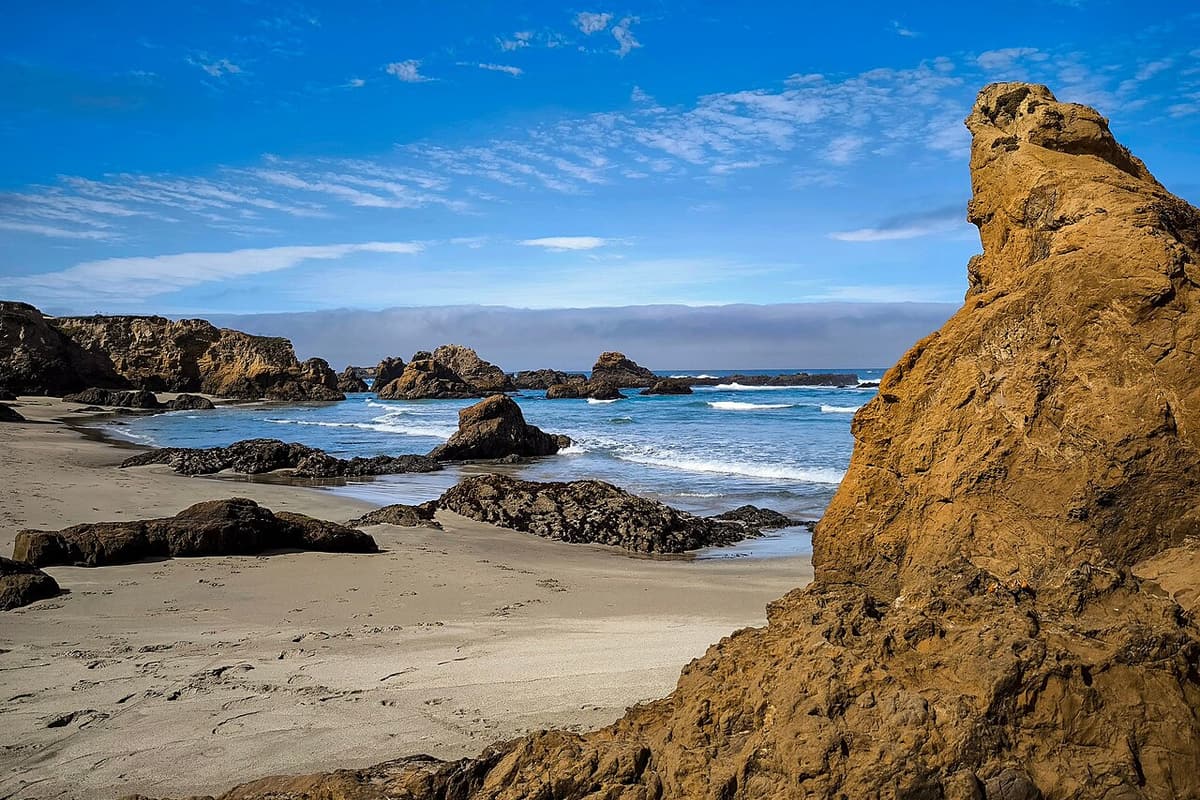
Fort Bragg is the blue-collar heart of the Mendocino Coast: part fishing port, part former mill town, and increasingly a base for walkers and whale watchers.
A short history
This is the homeland of Pomo peoples, who lived from the coast’s rich resources for thousands of years. In 1855–56 the federal government created the Mendocino Indian Reservation here, and in 1857 the Army built a small post to oversee it, named after Braxton Bragg, later a Confederate general. That history is painful, and the name has been debated locally. The post was abandoned within about a decade.
Lumber built the modern town. In 1885, Charles R. Johnson founded a mill and the railroad now known as the Skunk Train, and the city was incorporated in 1889. Mill and town recovered from the 1906 earthquake, and the mill dominated the waterfront until it closed in 2002. Since then, the bluffs have opened to the public for the first time in generations.
Top things to do
 In Fort Bragg
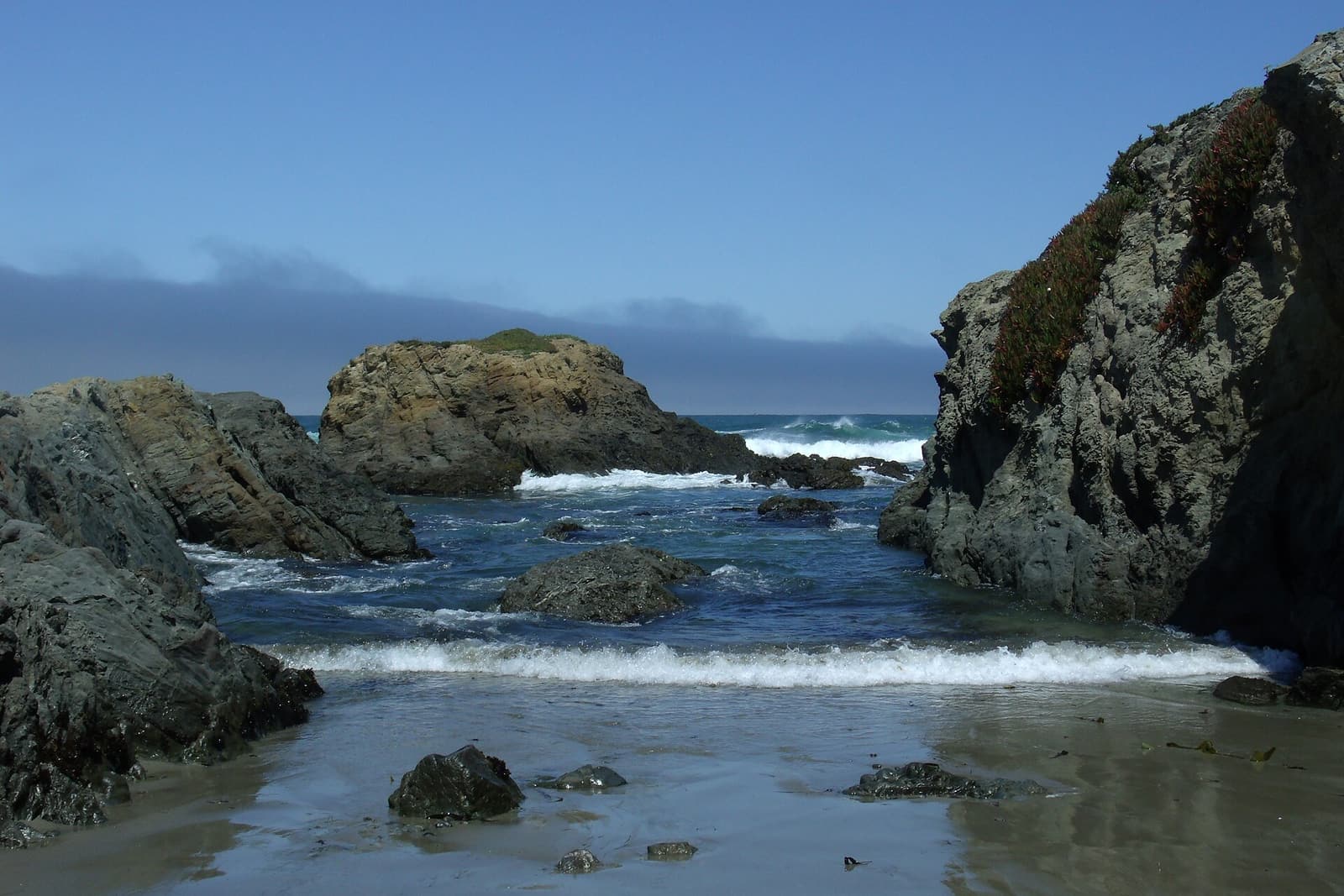
Glass Beach
A former town dump, polished by the Pacific into sea glass
For decades Fort Bragg dumped its rubbish over these bluffs. The ocean ground the glass into smooth pebbles, and the site is now protected as part of MacKerricher State Park. Look, photograph, and leave every piece where it lies.
 In Fort Bragg
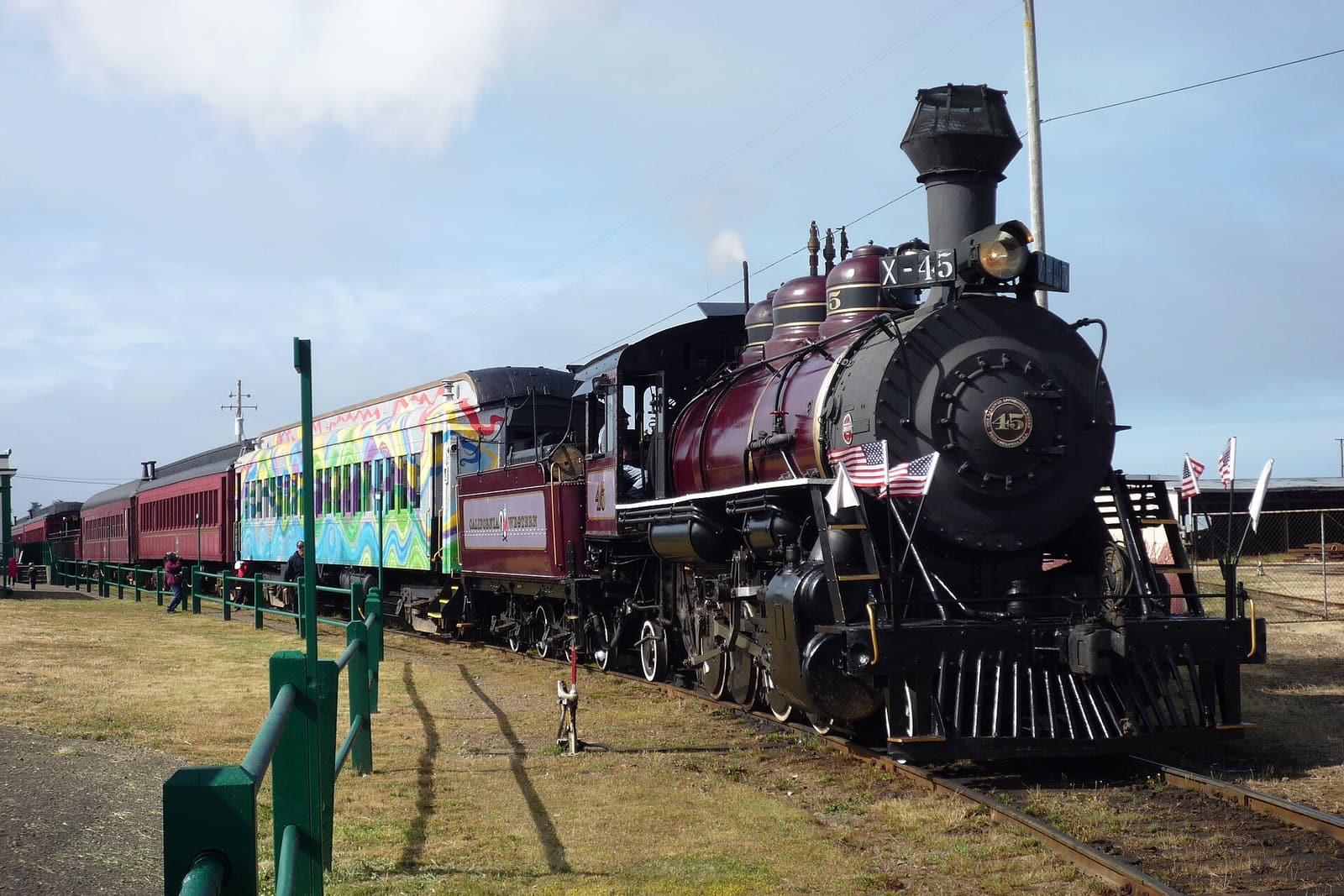
Skunk Train
A logging railroad from the 1880s, now a ride into the redwoods
The California Western line was built to haul redwood logs from the Noyo River forests to the mill at Fort Bragg. Today its trains and railbikes leave from the depot downtown for Glen Blair Junction and deeper along the rails.
 In Fort Bragg
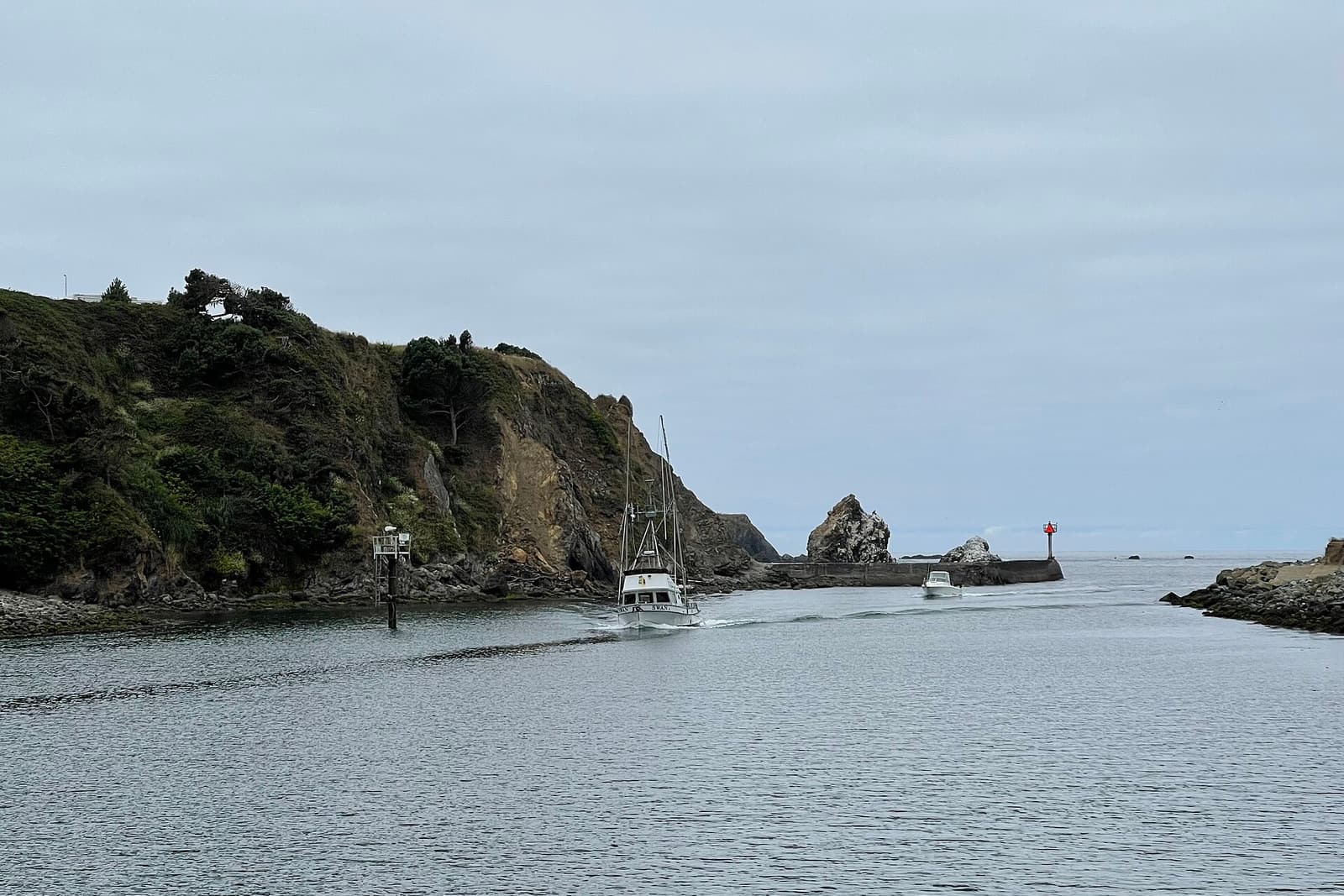
Noyo Harbor
The working fishing port at the mouth of the Noyo River
Below the Highway 1 bridge, crab boats and salmon trollers tie up beside seafood shacks, sea lions and a small beach. It is the place for fresh fish, a charter boat and the best sunset in town.
 In Fort Bragg
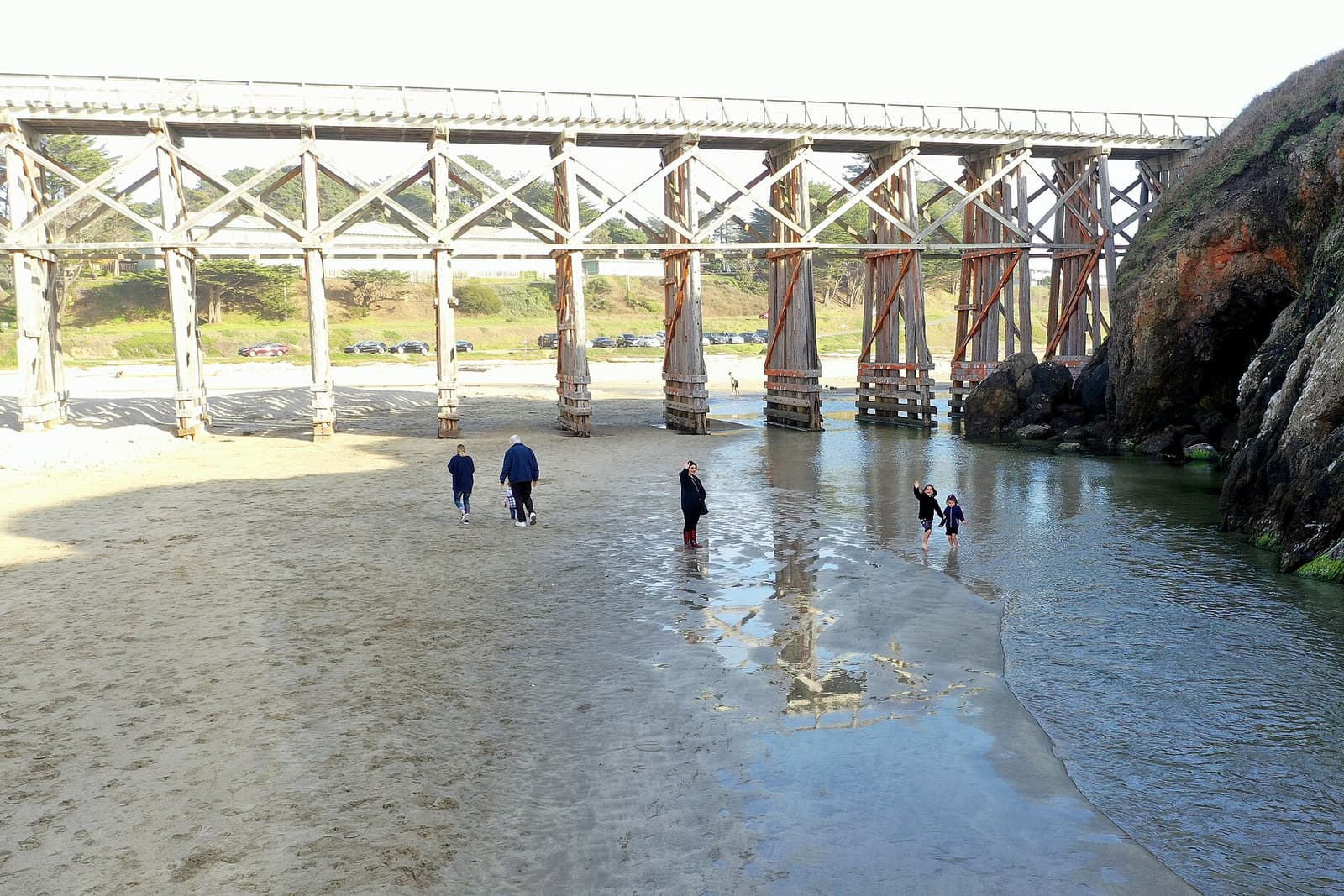
Noyo Headlands & Pudding Creek Trestle
Miles of paved bluff trail on the old mill site
When the lumber mill closed in 2002, the shoreline it had fenced off for a century slowly opened to the public. The Coastal Trail now follows the bluffs for several miles, and to the north the restored Pudding Creek Trestle carries walkers across the creek mouth.
- See sea glass at Glass Beach, and leave it there.
- Ride the Skunk Train or a railbike into the redwoods.
- Walk the Coastal Trail and the Pudding Creek Trestle.
- Eat seafood at Noyo Harbor.
- Spot seals at Laguna Point and whales offshore.
- Wander the Botanical Gardens to the sea.
- Day-trip to Mendocino and Point Cabrillo.
Food and drink
Seafood is the obvious choice, especially Dungeness crab in season. Main Street has bakeries, coffee shops and casual restaurants, and local breweries and Anderson Valley wines are easy to find. Opening hours are short by city standards, so plan dinner early.
Costs
Fort Bragg is cheaper than Mendocino, but California coast prices apply. Most sights are free. Budget roughly for a train ride, a paid garden visit and restaurant meals, and check current prices. Card payments are widely accepted, and tips of around 18–20% are normal in restaurants.
Safety
- Sneaker waves are the main danger. Never turn your back on the sea or climb on wet rocks.
- The water is cold year-round, with strong currents. Most beaches here are not for swimming.
- Bluff edges are unstable, so stay behind fences and on trails.
- Ticks and poison oak are found inland. Check yourself after hikes.
- Tsunami signs mark evacuation routes. If the ground shakes hard, head to high ground.
What to pack
Layers, a windproof jacket, sturdy shoes and binoculars, whatever the month. Fog can bring a chilly August day.
Is it Fort Bragg, California, or North Carolina?
The army base in North Carolina shares the name, but the two have no connection, and online searches often confuse them. All of this guide refers to the California coastal city. Exploring further afield? CaliforniaTravel.com is our sister guide to the state.